Most people reach for a calming chew once the dog is already panting, pacing or hiding behind the sofa. By then the chew is working against a dog whose stress response has already started, and it has thirty to sixty minutes of absorption ahead of it. The timing is the single thing most owners get wrong.
Give it before the trigger, not during it
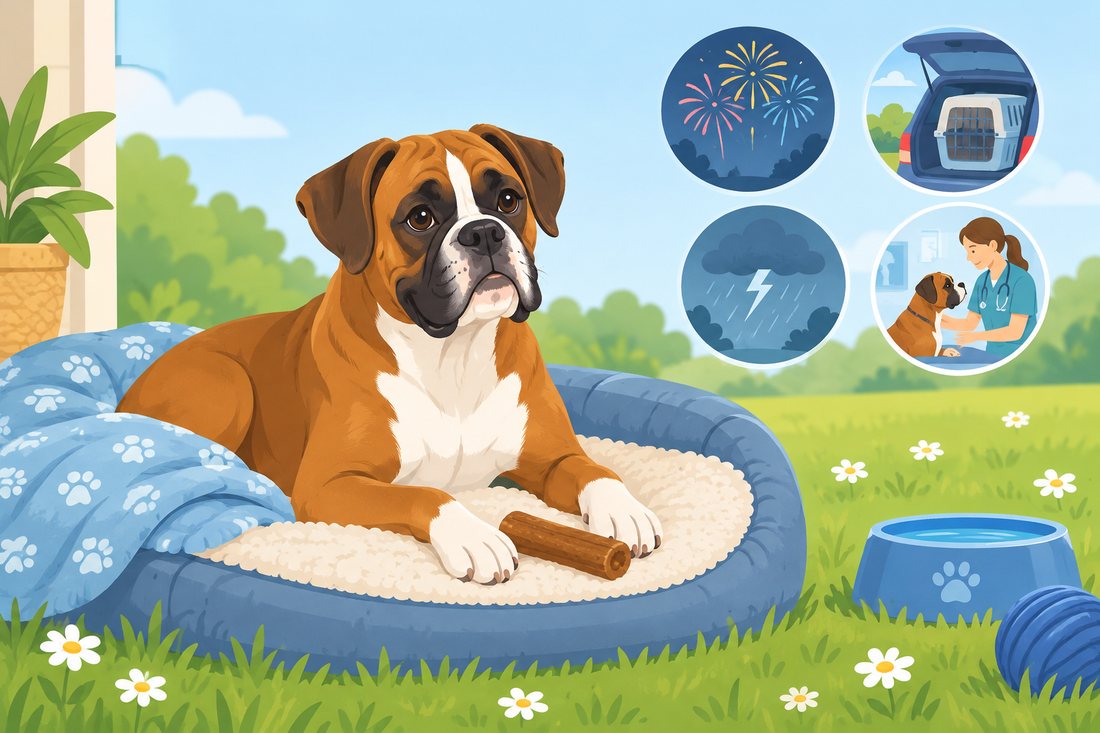
A calming chew is a pre-treatment. If you know the fireworks start at nine, the chew goes in around eight. If the vet appointment is at two, the chew goes in around one, before the car journey rather than in the waiting room.
Work backwards from the event
Read the pack for the onset time, then subtract it from when the stress starts. Most soft chews state thirty to sixty minutes. Treat that as the minimum and give yourself a margin, because a dog who has already started to wind up takes longer to settle than one who never got there.
Some triggers are predictable and some are not
Fireworks nights, car journeys, the vet, a house full of visitors and bath time are all on the calendar. Thunder is not. For unpredictable triggers, the honest answer is that a chew given as the storm arrives will do less than one given an hour ahead, and no product changes that.
Repeat doses have limits
Every pack states a maximum for a twenty four hour period, usually based on body weight. Doubling up because the first one seemed not to work is the most common mistake after mistiming, and it is the one worth avoiding. If a correctly timed, correctly dosed chew does nothing across several occasions, the product is not right for your dog and a vet is the next step rather than a bigger dose.
What good timing cannot fix
A chew takes the edge off. It does not train a dog out of separation anxiety, and it does not replace desensitisation work for noise phobia. Owners who get the most out of calming chews use them to make the training possible, not to avoid it.
Some links in this article are affiliate links. If you buy through one we may earn a commission, at no extra cost to you. It does not affect what we recommend.